All the safety of a dumbphone.
The practicality of a smartphone.
The first phone does not need to do everything. With SafetyMode, you decide exactly what it does: calls to approved numbers, location sharing, Google Maps, and nothing else until they are ready for more. Simple to start with. Powerful when you need it.

53%
of children have their own smartphone by age 11, rising to about 7 in 10 by age 12
Common Sense Media, 2019
Age 9-11
The age range where most children get their first phone.
Common Sense Media, 2019
Safely locked down, selected extras only.
Dumbphone set-up
- No social media
- No app store access
- No browser
- Calls to favourited numbers only
- No notifications except calls and messages
The extras that matter
- Location tracking for peace of mind
- Google Maps for independence
- Spotify or one hour of YouTube
- Emergency contacts always available
- Gradually unlock more as positive habits form
Start locked down. Open up as they grow.
Consensus amongst child education experts is growing towards one idea: digital access should grow with digital maturity. Start with the basics. Add features as positive habits are built. Raise a child who knows how to use technology, not just one who uses it.
2 hours
the upper limit of recreational (non-educational) screen time per day recommended by child psychiatry experts for school-age children.
American Academy of Child & Adolescent Psychiatry, Facts for Families No. 54
Be involved
in their digital growth
Children whose parents take an active, autonomy-supportive role with technology develop healthier habits than those left to self-regulate. Start it right.
“Universal Ingredients to Parenting Teens,” peer-reviewed review, 2022
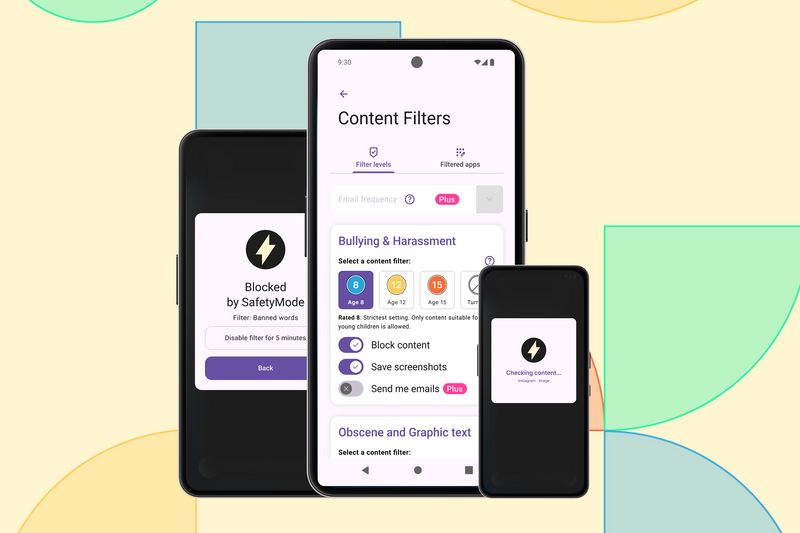
What Is the Difference Between Live Content Blocking and Web Filtering, and Which Is Safer for Children?
Read article
SafetyMode vs Kids360: Why Blocking Apps Isn't the Same as Keeping Kids Safe Inside Them
Read article